Cerberax Releasing 30.09.2026 by Wildcard
Major Engine Upgrade and New Creatures
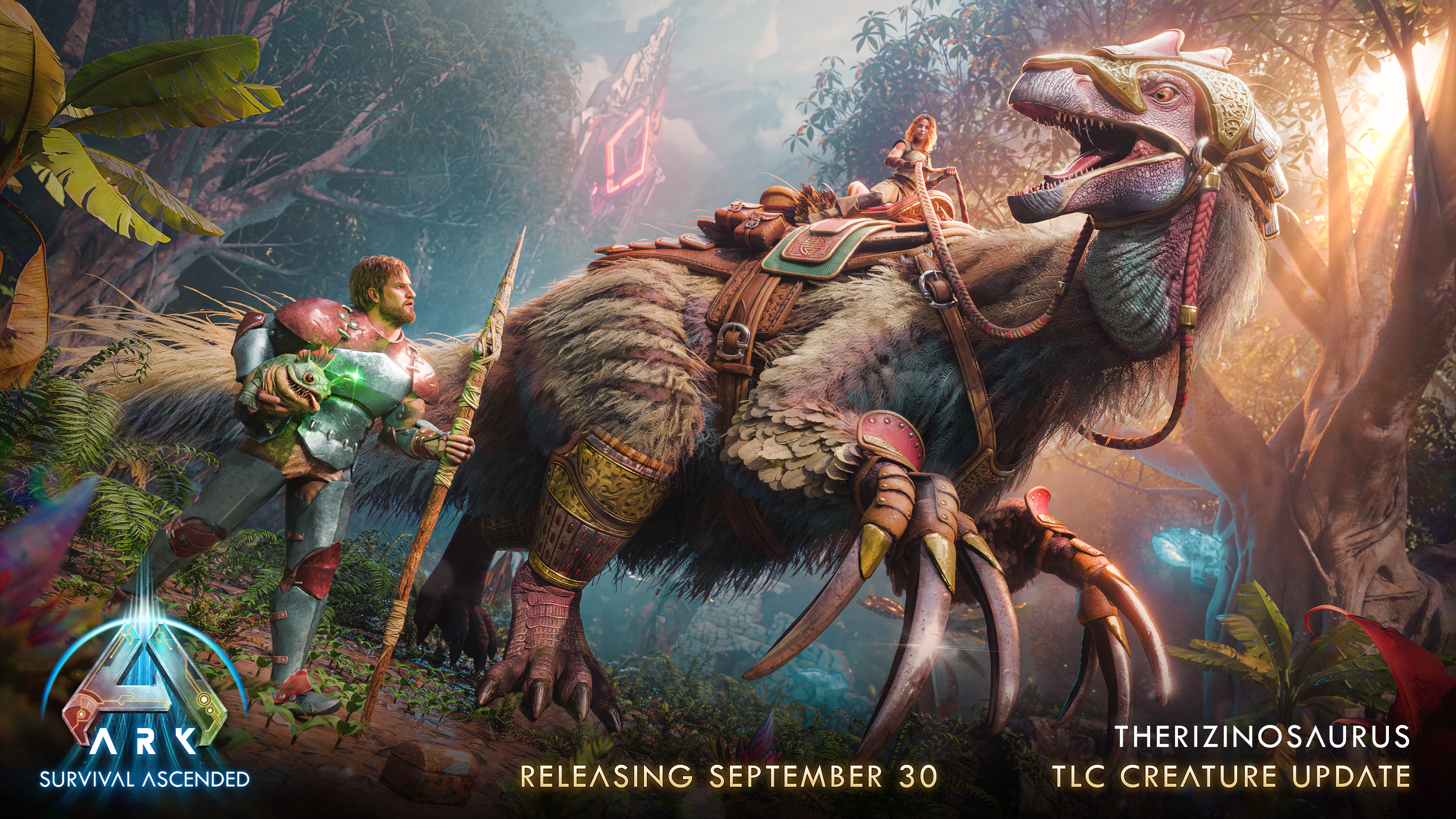
On September 30, 2026, a major milestone is set for ARK: Survival Ascended. Studio Wildcard is upgrading ARK's technical foundation to Unreal Engine 5.8, pairing the version jump directly with an extensive content package. Alongside the long-awaited TLC update for the infamous "Tickle Chicken" (Therizinosaurus), two new creatures make their debut on the server: the three-headed Cerberax (Fluffy) and the massive flying dragon Gargantar.
The TLC update for the Therizinosaurus is a free TLC update for everyone. Cerberax, on the other hand, is paid additional content (paywall) from ARK Fantastic Tames Season 1. The Gargantar, meanwhile, releases exclusively as part of the "Dragontopia" DLC.
The switch to Unreal Engine 5.8 will likely bring updates to the render pipeline, physics, and data structures—as well as probably a whole bunch of old and new bugs—Happy Hunting.
Therizinosaurus: Fresh Feathers for the "Tickle Chicken"
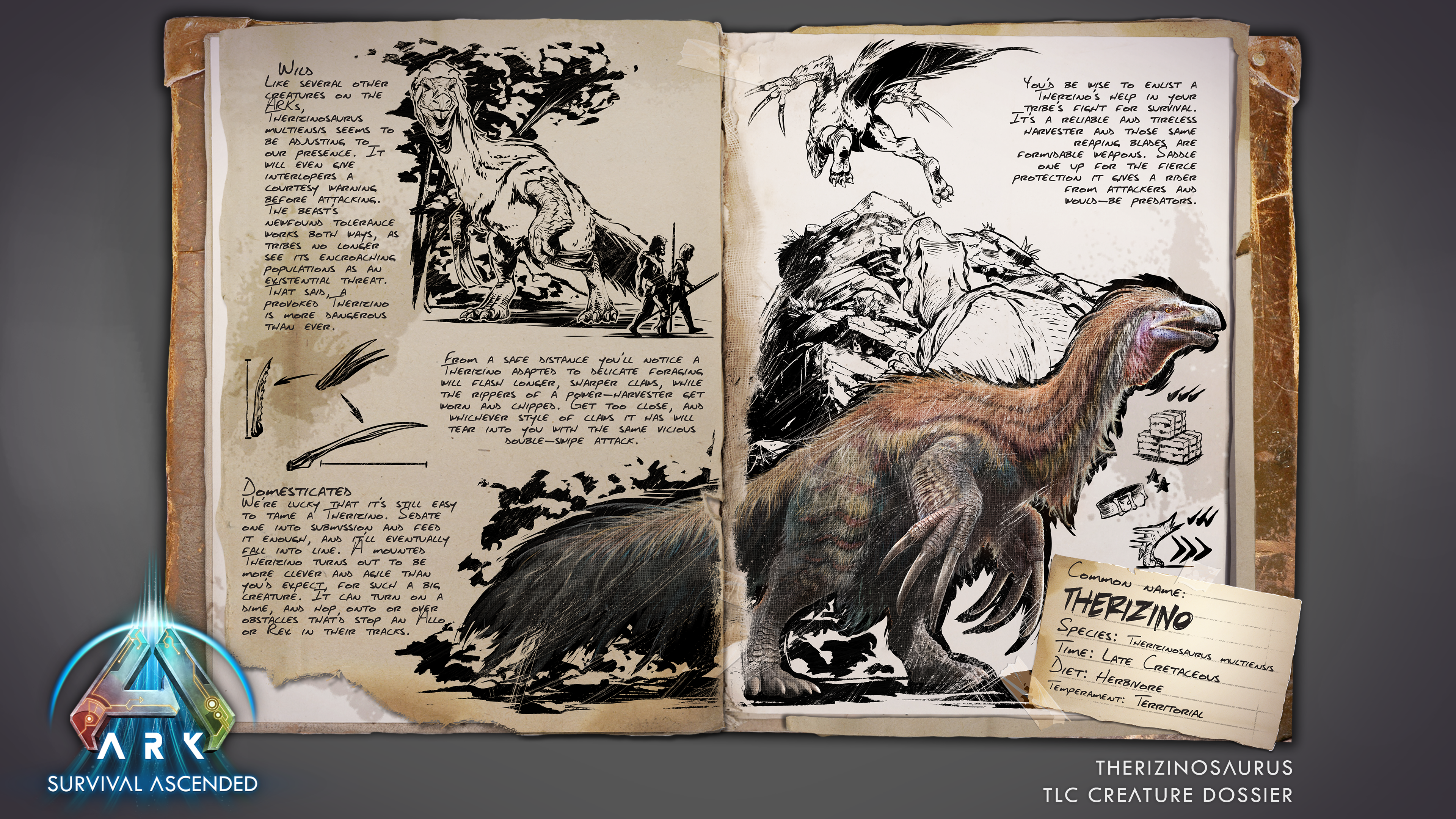
As the winner of the Extra Life community vote, the Therizinosaurus (Therizinosaurus multiensis) is receiving a comprehensive Tender Loving Care (TLC) update. Wildcard leaves the established role of the versatile resource harvester untouched, but noticeably modernizes combat responsiveness, control dynamics, locomotion, and visual progression.
Tamed Therizinos will in the future visually reflect their tribal purpose directly on the creature's model. An animal specifically trained for delicate yield ("Delicate Harvesting") displays long, pristine, razor-sharp blades. A lumberjack trimmed for brute destruction ("Power Harvesting"), by contrast, shows worn, chipped claws and an altered posture, giving each bred creature an individual touch.
In the wild, the herbivore behaves more predictably without losing any of its menace. Wild specimens no longer attack survivors without warning; instead, they first lock onto intruders with an unblinking stare and spread their claws threateningly. Anyone who ignores this final warning and breaches the minimum distance will immediately provoke an attack. In the saddle, the Therizinosaurus responds more agilely: A new sweeping leap ("Bounding Hop") allows it to clear rocks and terrain ledges where conventional large carnivores like the Rex or Allosaurus get stuck. In addition, it turns almost on the spot. In close combat, the rider has a new sweeping attack ("Claw Swipe") at their disposal to keep charging enemies at bay, complemented by a powerful double claw strike against armored targets. The taming process remains unchanged, using the classic knock-out method via sedation and feeding.
Links:
- https://survivetheark.com/index.php?/articles.html/community-crunch-523-swipe-right-r2558/
- https://ark.wiki.gg/wiki/Therizinosaur (still old version)
Scientific Classification (Paleontology)
While Wildcard's adaptation mechanically boosts the aggressive predator attitude, the real-world counterpart from the Late Cretaceous roughly 70 million years ago was a paleontological curiosity. During the first excavations in the Nemegt Formation of the Gobi Desert (Mongolia), Soviet researchers led by Evgeny Maleev mistook the massive horn cores unearthed in 1954 for the rib bones of a gigantic sea turtle. This gave rise to the scientific specific epithet cheloniformis ("turtle-shaped").
Only later skull discoveries and complete skeletons of related taxa cleared up the misunderstanding: Therizinosaurus was a theropod up to ten meters long and weighing over five tons. Unlike its carnivorous relatives such as Tarbosaurus, this lineage underwent a secondary evolutionary transition to a strictly herbivorous lifestyle, recognizable by a narrow horny beak, leaf-shaped teeth, and a voluminous torso suited for lengthy fermentation processes. The bone cores of the sickle claws alone reached over 70 centimeters in length and, with the keratinous sheath present in life, measured over a meter—the longest known claws in Earth's history. They primarily served to pull down high-hanging foliage, though they undoubtedly also functioned as lethal slashing weapons against attacks from apex predators.
Cerberax: Three Heads, Three Personalities
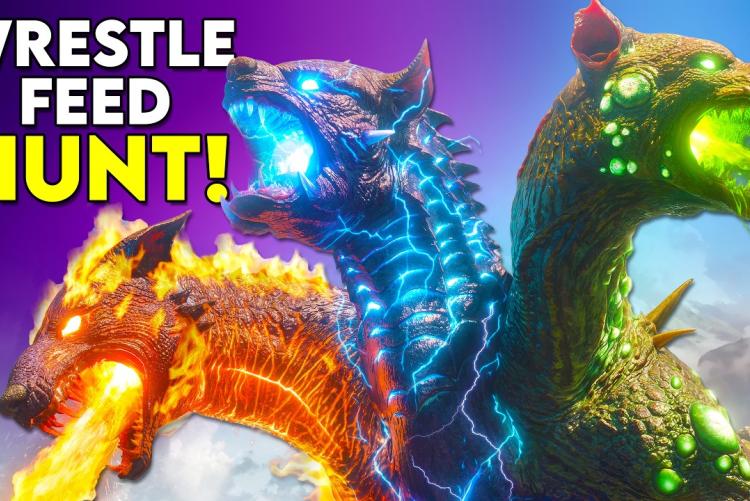
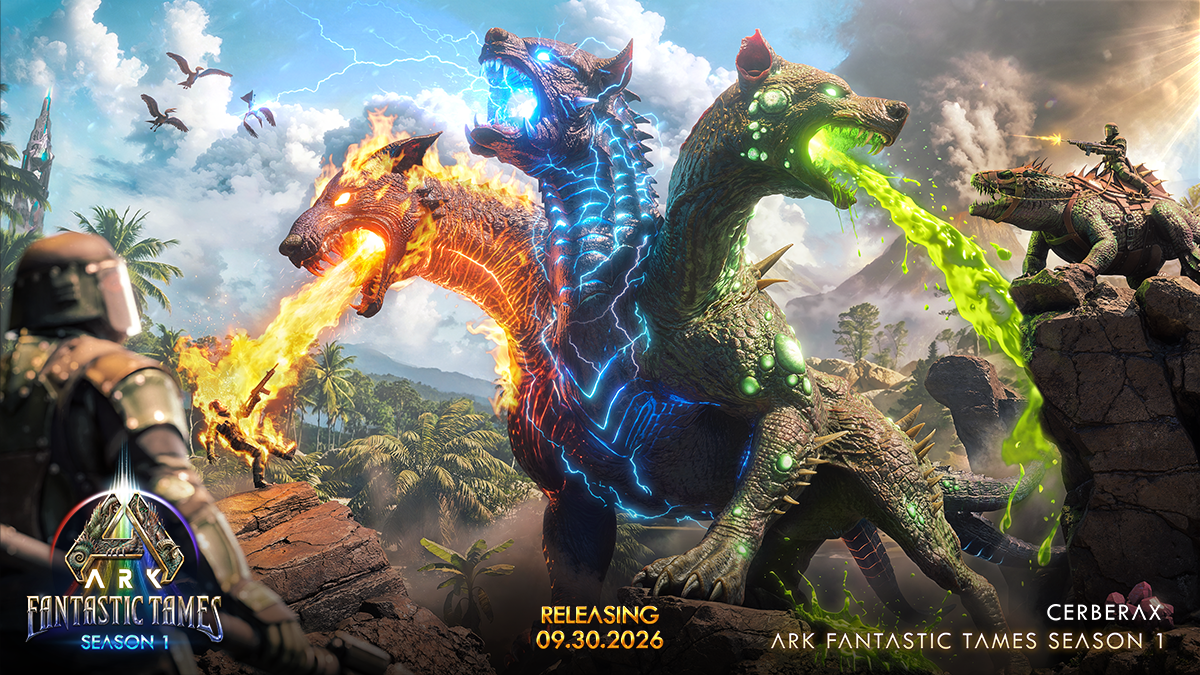
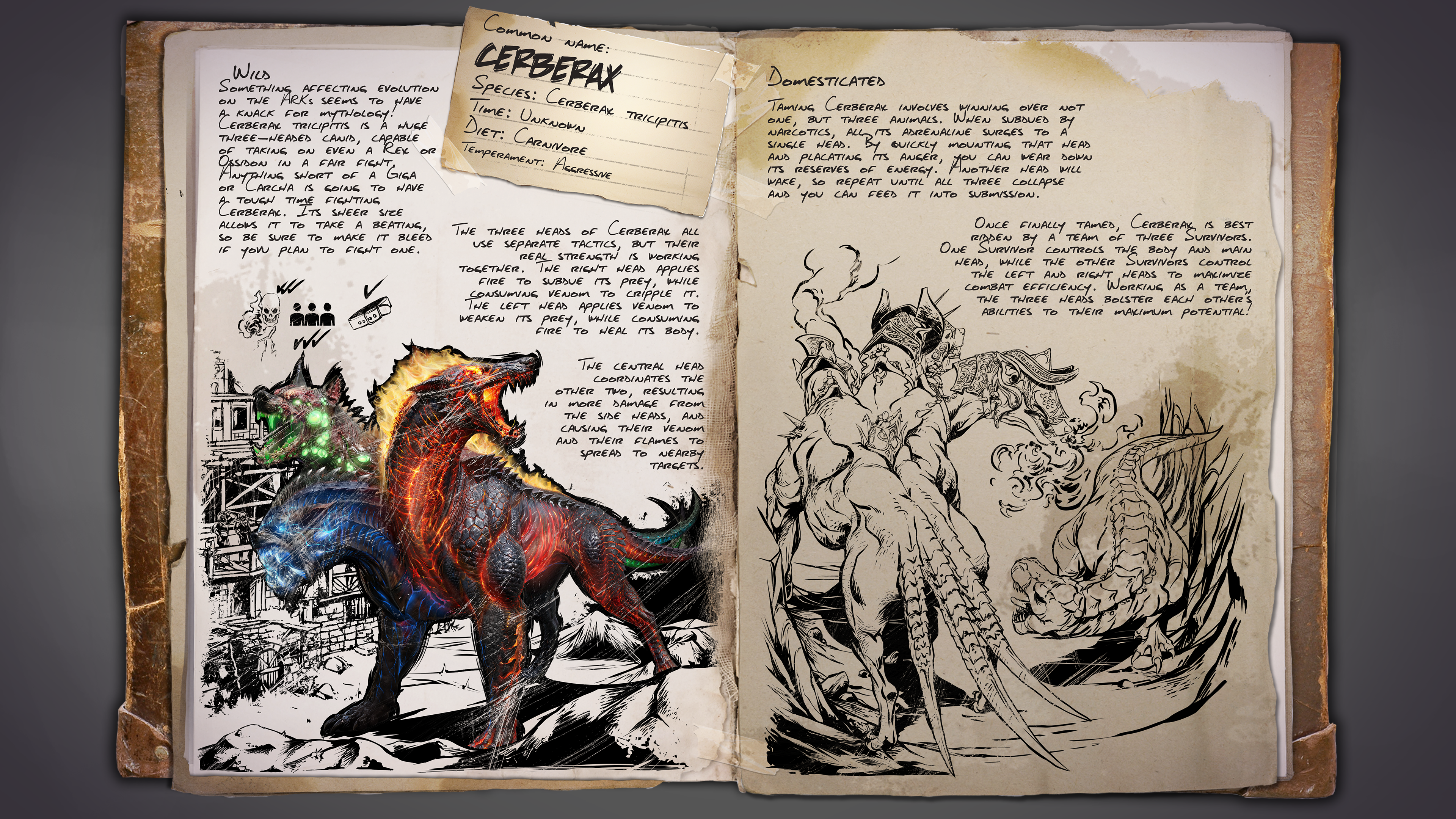
With Cerberax (Cerberax tricipitis), a mythological frontline apex enters the territory of ARK Fantastic Tames Season 1. The gigantic three-headed beast ranks in the hierarchy just below the Giganotosaurus and Carcharodontosaurus, effortlessly dominating clashes against regular heavy battle mounts like the Rex or Ossidon.
The core strength of the Cerberax lies in the synergistic interplay of its three heads, which feature distinct elemental functions:
- Right Head (Fire): Deals fire damage to wear down enemy armor and health points. It also consumes poison debuffs applied by the left head to severely cripple targets.
- Left Head (Poison): Afflicts attackers with debilitating toxin effects. Can absorb burning area-of-effect damage to actively regenerate its own health.
- Middle Head (Coordination): Acts as a tactical amplifier. It increases the base damage of the flanking heads and causes fire and poison effects to spread explosively to nearby enemies in the area.
Cerberax is fully playable solo, with the driver controlling the torso and the central main head. However, the creature unleashes its maximum combat potential as a platform for three survivors: While the main rider handles maneuvering and area-of-effect damage, the co-riders target and simultaneously fire off the side heads' elemental attacks.
Links
- https://survivetheark.com/index…
- https://survivetheark.com/index.php?/articles.html/community-crunch-524-three-of-a-kind-r2559/
- https://ark.wiki.gg/wiki/Cerberax
The Taming Process: "Three Trials, No Majority Rule"
Contrary to early speculation, a trio of players is not required for taming; the process can be handled entirely solo. Wildcard eschews the conventional knockout method and instead combines several familiar taming mechanics into a three-stage procedure.
Similar to the Acrocanthosaurus, Cerberax must first be dealt massive damage in open combat until the creature triggers a specific roar animation. Narcotics or Bio Toxin must be administered during this vulnerability window. The resulting intoxicated state forces the beast's adrenaline into a single head at a time, which remains awake and insists on its own conditions:
- Power Struggle: One head demands physical dominance. The survivor mounts the active head and must follow precise directional arrows—similar to the riding minigame of the Andrewsarchus or Concavenator—to stay in the saddle and break its resistance.
- Negotiation: One head responds to food and requires targeted, passive feeding of special nourishment (presumably kibble) within tight time windows.
- The Hunt: The remaining head demands a joint bloodbath in the style of the Carcharodontosaurus or Amargasaurus, requiring specific prey animals in the vicinity to be slaughtered.
Only after all three trials have been successfully completed and the creature's energy reserves are completely depleted does the Cerberax collapse and can finally be claimed for the tribe.
Mythological Background: The Hellhound Cerberus
The inspiration for Cerberax comes directly from Greek mythology. Cerberus (Greek Κέρβερος, Latinized Cerberus) was the offspring of the monsters Typhon and Echidna. As the terrifying guardian of the Underworld, he guarded the gates of Hades with a clear directive: he permitted the shades of the deceased to enter, but mercilessly prevented any return to the land of the living.
Classical accounts often describe the hellhound with three heads, a mane of hissing serpents, and a dragon's tail. According to Ovid, toxic foam dripped onto the ground from the slaver of the raging Cerberus, from which the extremely poisonous plant wolfsbane (Aconitum) sprouted—a mythological reference that Wildcard's design incorporates through the poison-spitting left head.
The in-game taming process also references the twelfth and most arduous labor of Heracles. The demigod was tasked with bringing Cerberus alive out of Hades to the surface of the earth—albeit under the condition set by Hades, the god of the Underworld, that he subdue the beast without using iron weapons. Heracles wrestled the beast down with pure physical strength in a chokehold. The moniker "Fluffy," on the other hand, originates from modern pop culture: in Harry Potter and the Philosopher's Stone, Rubeus Hagrid gave his three-headed guard dog this harmless name, which quickly established itself as an ironic synonym across gaming communities.
Brief Outlook: Gargantar (ARK Dragontopia)
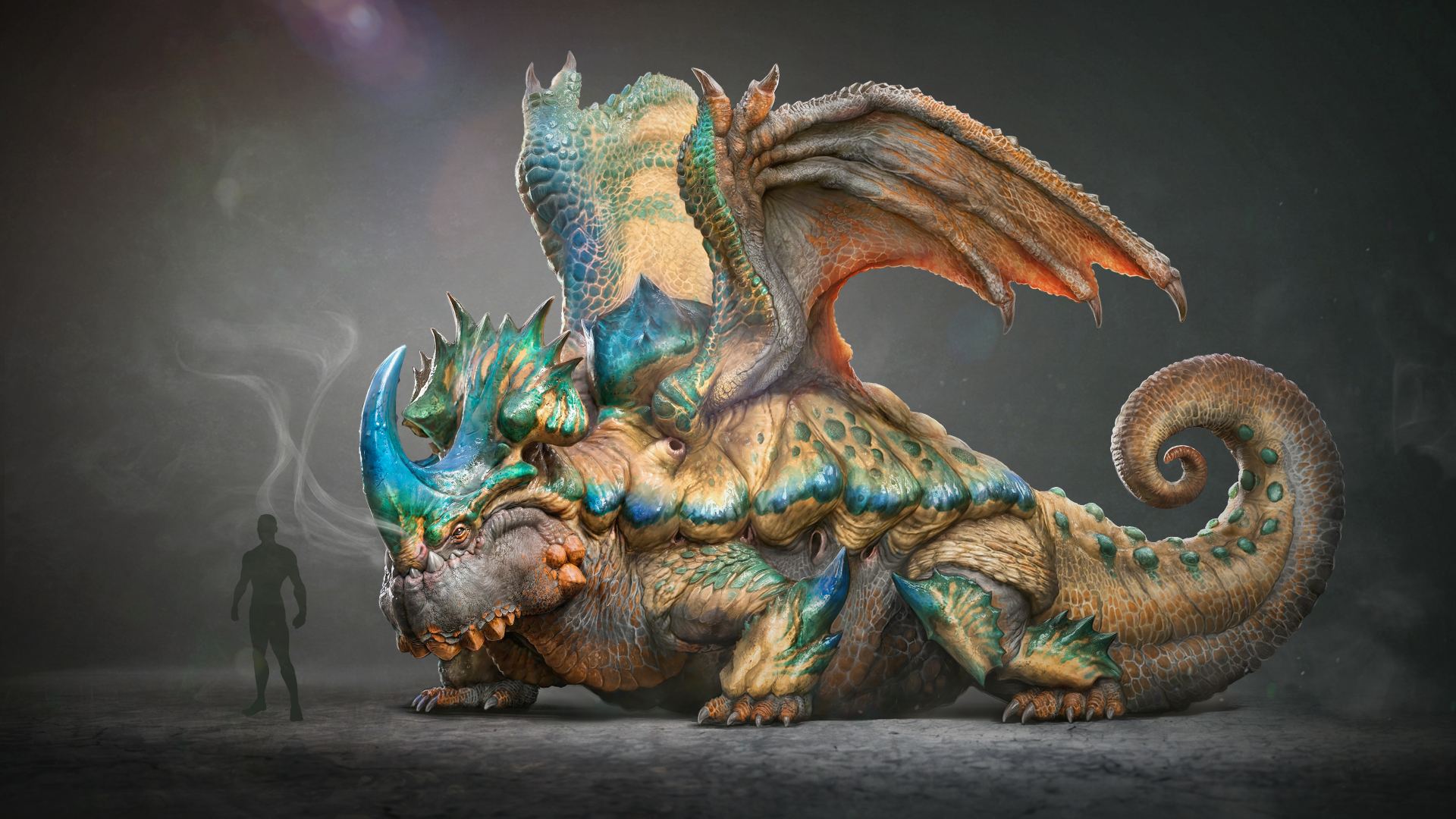
Releasing alongside Cerberax on September 30 is the Gargantar from the ARK: Dragontopia DLC. While Cerberax is designed for frontline skirmishes on the ground, the Gargantar functions as a heavily armored flying siege and aerial combat platform for larger alliances.
The name combines two cultural-historical motifs: on the one hand, the legend of the Gargouille—a dragon-like marsh beast of French folklore along the Seine, whose defeat by Bishop Romanus of Rouen became the origin of gothic gargoyles. On the other hand, the term denotes giant stature in the vein of Rabelais' Renaissance giant Gargantua. Wildcard adapts this motif into a ponderous behemoth of the skies, poised to shake up existing aerial combat hierarchies.
Links: